What you gain and how we do it
- 01
Clear language structure
we define which languages should be used and how they should work on the website
- 02
Language versions consistent with the offer
we adapt content so it sounds natural and specific
- 03
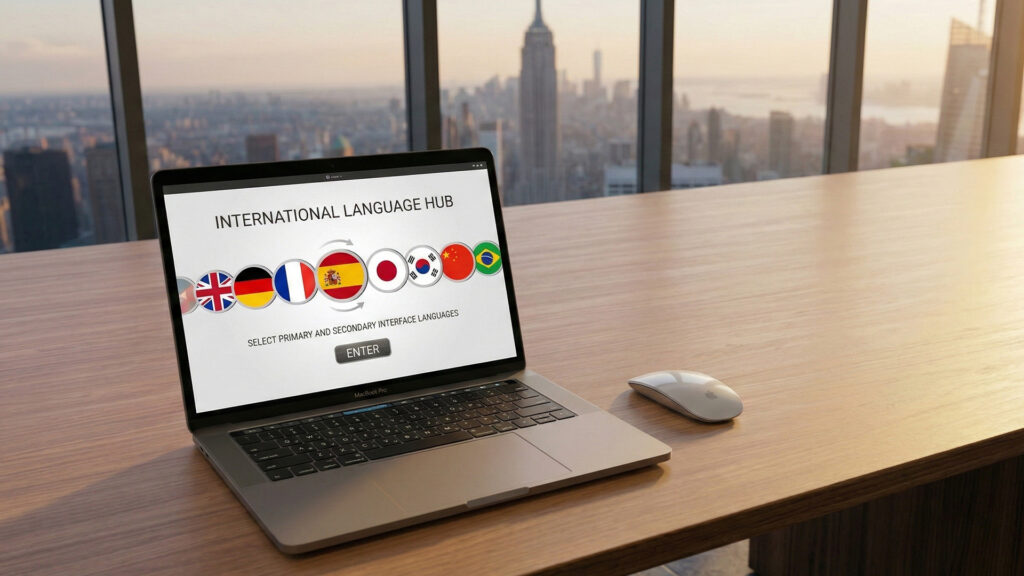
Convenient language selection for the customer
clear switching and logical navigation between versions
We reply within 24 hours.

URL Structure for a Multilingual Website -
A Choice That Affects SEO and Maintenance
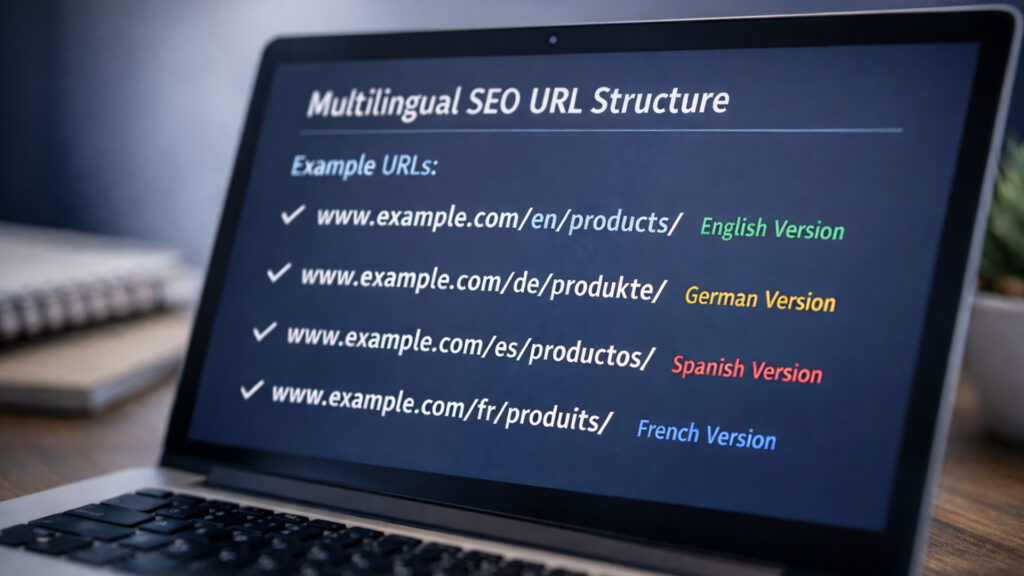
URL structure is one of the most important decisions for multilingual websites. It affects SEO, maintenance, and how Google recognizes language versions. Most often, the choice comes down to three models: a language directory, subdomain, or separate domain.
Language directory (e.g. /en/)
The most commonly chosen solution
It makes maintenance easier and helps inherit domain authority. Good when you want to develop language versions within one brand and one domain.
SEO and consistent structure
Google can more easily understand the relationships between versions, and you manage everything in one place, such as CMS, templates, and implementation.
Subdomain (e.g. en.yourdomain.com)
Environment separation
It may make sense if, for some reason, you want to separate environments technically or organizationally.
More SEO work
In SEO, a subdomain is often treated as a separate entity, so some actions and signals may require more conscious management.
Separate domain (e.g. yourdomain.com)
The highest independence
Sometimes justified when the brand operates independently in different markets or when there are legal or organizational requirements.
The highest maintenance and SEO cost
It requires more SEO work because each domain builds visibility separately, and maintenance and implementations are split across several websites.
SEO for a Multilingual Website
Hreflang, Canonicals, and Avoiding Duplication
International SEO is about making Google understand which website version is intended for which language and country. Without it, Google may show users the wrong version in results or treat different languages as duplicates. What we configure in practice.
Hreflang and equivalent mapping
Canonicals and indexing rules
Sitemap and robots
How We Prepare Translations
for a Multilingual Website
A multilingual website requires consistent translations. It is not only about linguistic correctness, but also about terminology consistency, style, and industry fit. That is why we define a workflow that allows fast work while maintaining quality.
Manual translations (copywriter / native speaker)
Best when you need strong quality and refined style in a given language. It works well for sales pages and industries where precision matters.
AI + verification
This can be a fast solution if quality control is in place. We then apply review and proofreading, and if needed, refine fragments that influence the user’s decision, such as the offer, CTA, or FAQ.
Translator + glossary
A good option for technical websites. A glossary limits terminology drift between pages and future updates.
How we maintain consistency
We define a glossary of terms, such as service names, process elements, and key phrases, as well as style rules. This way, the website does not sound like a mix of different sources, but like one consistent communication.
Which Content We Translate 1:1,
and Which We Localize
Not everything is worth translating literally. Some fragments can be transferred 1:1, but there are also elements that are better localized: content dependent on location, offer, or market context. In practice, this often determines whether a language version works or merely exists.
What we usually translate 1:1
Service description and process
If the service is the same, the process can be translated directly while maintaining terminology and style.
Basic company information
Contact details, scope of operation, cooperation rules, and formal elements usually remain consistent.
What is better to localize
Location-dependent content, such as cities and regions
If we create pages for cities or regions, we adapt the content to the place in a given language: natural names, local context, and references instead of copying the main version.
Offer elements that differ between countries
When the offer differs between markets, we localize content to show real differences: terms, availability, prices, logistics, deadlines, and delivery method - without universal promises.
Language Switcher and Navigation
on a Multilingual Website
A multilingual website should switch languages naturally. After changing the language, users do not want to go back to the homepage and search for everything again. That is why the language switcher should lead to the equivalent of the same subpage. How it should work:
Linking to the corresponding subpage
If you are on a service page in Polish, clicking EN takes you to the same service in English, not to the EN homepage.
Menu and structure per language
The menu does not always have to be identical. Sometimes you add separate sections in one language because the market needs them. What matters is that users have logical navigation within their version.
Managing Translations in the CMS
Conveniently and Quickly
Implementing multilingual functionality in the CMS must make editing easier, not more complicated. That is why we set up a work model where adding new pages and updating content does not mean manually copying everything into 5 language versions. How we organize content management:
Linked page versions
Language versions are connected with each other, making it easy to go from PL to EN and check what still needs to be completed.
Roles and responsibility
We define who edits content and what the publication process looks like. This matters if more than one person works in the company.
Media and components
We keep order in media and reusable blocks. This makes the website consistent and editing fast.

Performance and Technical Aspects
with Multiple Languages
Language versions mean more pages, more assets, and more elements to control. That is why we take care of performance and stability: cache, image optimization, order in assets, and post-implementation tests. This is especially important if the website has a blog and grows quickly.
What we pay attention to technically
Cache and speed
We configure cache so the website is fast in every language, including on mobile.
Images and assets
We optimize images and make sure the website does not load unnecessary files in every language version.
Post-implementation stability
After launch, we check indexing, the language switcher, redirects, and basic user scenarios.
Multilingual Website Creation
Step by Step
If you want to quickly see what multilingual website implementation looks like, below are the most important steps. This is a useful checklist before deciding on the language structure.
Strategy
Architecture
International SEO
Content
UX
CMS
Testing and Publication
Frequently Asked Questions
About Creating a Multilingual Website
We present the most frequently asked questions about creating a multilingual website.
How much does adding another language cost?
It depends on the number of pages and whether we translate 1:1 or localize the content. Sometimes SEO work is also involved: hreflang, page mapping, and additional indexing tests.
Does a multilingual website affect SEO?
Yes, but it can work in your favor if the structure is implemented properly. Correct hreflang, no duplication, and logical indexing of language versions are key.
How should the blog and new posts be translated?
It is best to define the rules: whether the blog should exist in every language or only in selected ones. Often, you start with one language and only then translate the key content that has traffic potential.
What if I do not want all pages in one language?
That is normal. In that case, we define which pages have equivalents and which do not. It is important that hreflang and the language switcher do not lead to dead ends.
Can the language switcher automatically detect the user’s language?
It can, but carefully. It is better to give users a choice and avoid aggressive redirects. For SEO, it is important that each version has a fixed URL and is available for indexing.